How the Main Machines Work Together
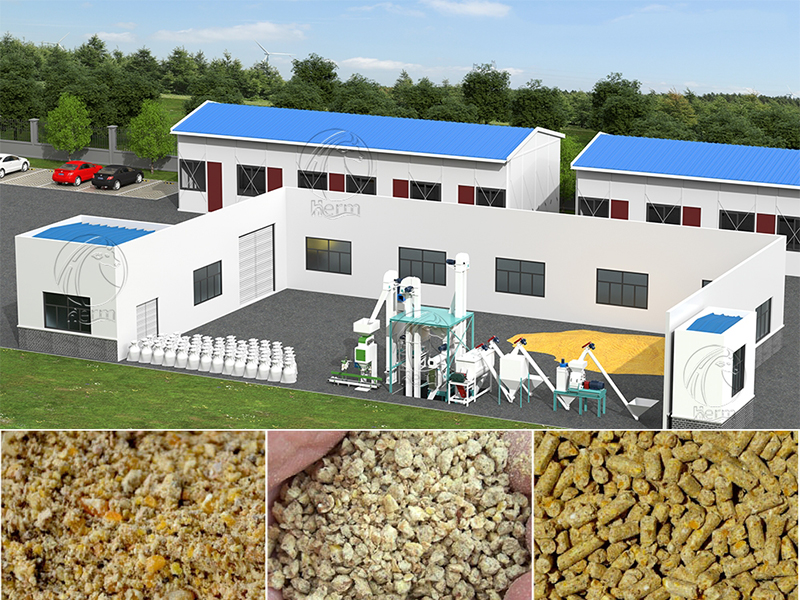
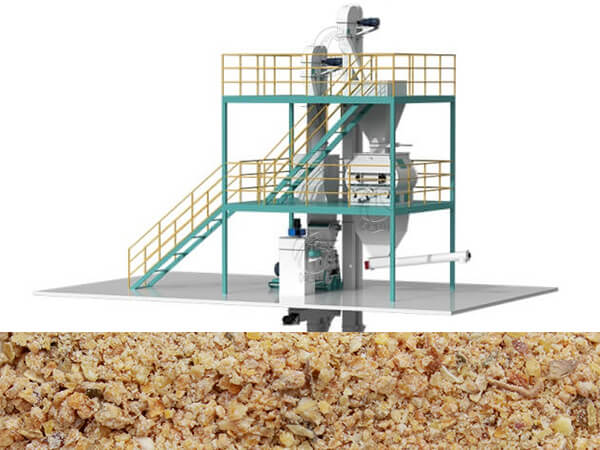
A complete set of animal feed machines prepares ingredients, combines them to a formula and converts the blend into the required feed form. Equipment choice depends on raw materials, animal species, capacity and the desired product: mash, pellets or crumbles.
1. Crushing: Set the Right Particle Size
A hammer mill uses rotating hammers and a screen to reduce raw materials. Grinding affects mixing uniformity, pellet quality, power demand and the way animals consume the feed.

Material entering the chamber is struck by the hammers and moves against the internal surfaces until particles are small enough to pass through the screen. Screen size should be selected for the formula; excessively coarse or fine grinding can create downstream problems.
Pellets can also be reduced to smaller pieces with a crumbler when chick feed or another small-size product is required. This is a different step from grinding raw ingredients.

2. Mixing: Keep Every Batch Uniform
The feed mixer distributes grains, protein ingredients, minerals and other additives according to the formula. Uniform mixing helps each portion of feed remain consistent.

Ribbon mixer
Inner and outer ribbons move material in opposite directions through the trough, creating circulation and shear. This design is commonly used for dry feed mixtures.

Double-shaft paddle mixer
Two counter-rotating shafts lift and turn material through the chamber. The mixing action can be configured for a shorter batch cycle, subject to ingredients and target uniformity. Choose the mixer based on batch size, liquid addition and cleaning requirements.
The original article also mentions a conical planetary mixer. It uses rotating helical shafts to circulate material near both the wall and center, and may suit specific powder-mixing applications.
3. Pelleting: Form the Finished Feed
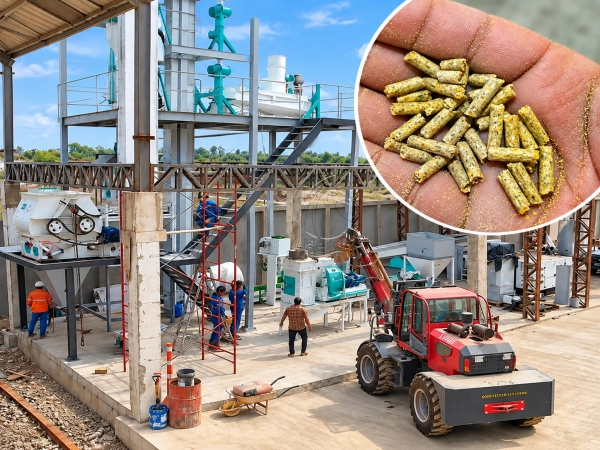
A feed pellet mill presses conditioned material through die holes to form pellets. Pellet diameter and length should match the animal and production stage. The line also needs suitable cooling and screening after the mill.


Pelleting can make mixed feed easier to handle and may reduce ingredient separation. Heat and moisture during conditioning can reduce some microbial loads when the process is validated, but pellet production alone does not guarantee pathogen-free feed.

Pellets and extruded feed: A ring die mill makes dense cylindrical pellets for many poultry and livestock formulas. Extrusion uses a different process and is often selected for floating aquatic feed or products requiring particular texture and shape.
Choosing Between Mash and Pellets
Mash feed uses grinding and mixing without a pelleting stage. It can require less processing equipment, but dust, segregation and handling losses should be considered. Pellets add conditioning, pressing and cooling steps, so the decision should weigh the feed specification against capital and operating costs.
For an equipment proposal, define the raw materials, target capacity, formula types, required feed form and available building space before selecting individual machines.
Discuss Your Feed Plant
Established in 2010, HERM Machinery supplies feed mill machinery, animal feed machines and complete plants, including cattle feed plants. Share your feed type, target output and site dimensions to discuss a suitable process and machine configuration.