Home > Cases > 3-4Ton/H Poultry Feed Mill Plant in Tanzania

3-4Ton/H Poultry Feed Mill Plant in Tanzania

Date:22-05-20

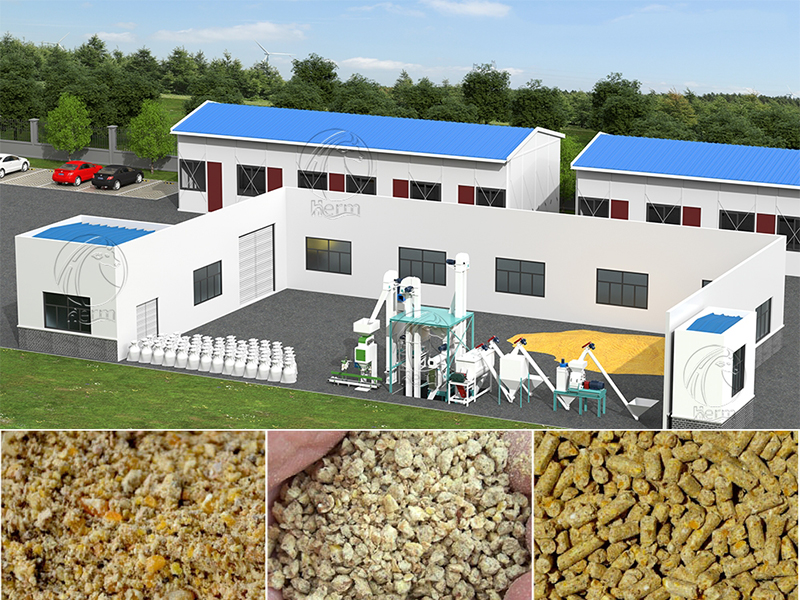
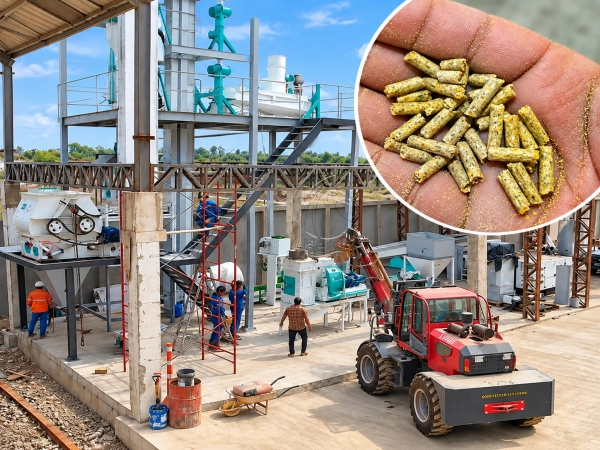
HERM provided a turnkey 3–4 T/H poultry feed plant for a customer in Tanzania producing chicken feed in 2, 3, 4 and 6 mm pellet sizes. The original project update reports that installation was complete and the line was ready for normal use. Explore the project photographs, video and key stages of feed production.

Discuss a similar project ↓

PROJECT AT A GLANCE

LOCATION
Tanzania
PROJECT CAPACITY
3–4 T/H
PELLET SIZES
2, 3, 4 and 6 mm
REPORTED STATUS
Installation complete

01   PROJECT EQUIPMENT

A Turnkey Line for Chicken Feed

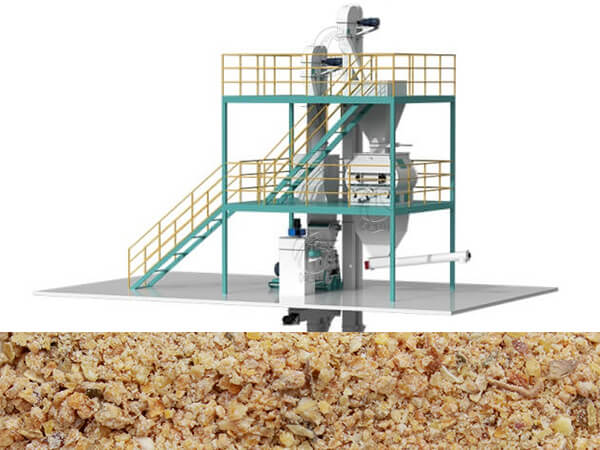
The published equipment description includes a double-ribbon mixer, a 132 kW pellet machine with a side feeder, and galvanized silos in two capacities. The customer compared suppliers on equipment, installation and service before choosing HERM.

Tanzania poultry feed mill project photograph 1

02   MATERIALS & SITE PLANNING

Match the Plant to Your Feed Formula

A feed mill plant should be planned around the intended birds, daily feed demand and locally available ingredients. Grains, protein meals, bran, oils and minerals serve different roles in a formulation; the processing line needs to accommodate their handling characteristics.

For a similar installation, prepare an ingredient list together with the required storage quantities and delivery arrangements. This makes it easier to discuss silo selection, receiving access and movement between storage and production.

Small-dose additions require appropriate weighing and handling. Review premix processing separately where it forms part of the project, rather than assuming that bulk ingredient equipment can handle every addition accurately.

03   PREPARATION & BATCHING

Build a Consistent Batch Before Pelleting

1. Storage and cleaning

Keep ingredients organized by type and provide practical access for inspection. Cleaning and foreign-material removal should precede sensitive processing equipment, with a defined route for rejected material.

2. Grinding

Select the grinding specification from the required particle size and ingredient characteristics. Screen changes, wear-part access and dust collection are useful points to discuss during equipment review.

3. Weighing and batching

Batching equipment should match the recipe quantities and mixer batch size. Establish how bulk ingredients and small additions will be weighed, recorded and transferred.

4. Mixing

The mixer distributes the weighed ingredients through each batch. Consider loading sequence, liquid addition, discharge arrangements and cleaning access as part of the operating procedure.

Tanzania poultry feed mill project photograph 4
Tanzania poultry feed mill project photograph 5

04   PELLET PRODUCTION

From Mixed Ingredients to Finished Feed

A feed pellet line connects forming, cooling and product sizing. Each stage should support the required finished feed rather than operate as an isolated machine.

5. Conditioning and pelleting

Pellet diameter is selected through the die configuration. Recipe, conditioning and die condition also influence operation, so a quoted hourly capacity should be reviewed against the intended feed specification.

6. Cooling

Cooling prepares freshly formed pellets for subsequent handling. Set operating targets with the equipment supplier for the formulation and local conditions, rather than applying one temperature or moisture value to every product.

7. Crumbling and screening

Use crumbling when the required feed form calls for smaller particles. Screening then separates the product by size; clarify the route for fines and oversized material in the process design.

8. Weighing and packing

Choose bagging equipment around the intended bag size and dispatch rate. Include room for weighing checks, bag closing, handling and finished-feed storage.

Tanzania poultry feed mill project photograph 6
Tanzania poultry feed mill project photograph 7

05   PROJECT QUESTIONS

Planning a Similar Poultry Feed Plant

Who is this type of plant for?

Farm operators and feed suppliers can assess a plant against their own consumption or sales plan. Start with daily demand, planned working hours and the range of feed products.

Can one line make different feeds?

A change of product may require different recipes, dies and operating settings. Discuss the full product range and cleaning procedure before finalizing the equipment configuration.

What site information is needed?

Provide building dimensions, access routes, electrical supply, storage needs and the intended production schedule. These inputs support a practical layout and a clearer equipment scope.

What support should be agreed?

Confirm design deliverables, installation responsibilities, commissioning, operator training, spare parts and after-sales support in the proposal. These details help define the project beyond the machinery supply.

Explore HERM’s feed production lines to discuss a configuration for your required capacity and feed products.

DISCUSS YOUR PROJECT

Planning a Chicken Feed Mill?

Share your feed formulas, target capacity, pellet sizes and packing requirements so HERM can review a suitable layout and equipment configuration.

Founded in 2010, HERM develops feed mill machinery and supplies animal feed machines and complete cattle feed plants.

Service Around The World

Show More

Get In Touch

Thank you for your interest in Herm. Let us be your solutions source. Fill out the form below and we will contact you.

    © Henan Herm Machinery Co., Ltd. All Rights Reserved ( Terms of Use)

    Developed and Managed by HERM Limited