Start with Your Customers and Feed Products
Before selecting a poultry feed production plant, define whether you will supply your own farm, nearby producers or a wider commercial market. Broiler and layer operations can require different feed formulations and product specifications.
Estimate realistic daily demand, operating hours and storage requirements. These inputs help establish the line capacity and avoid purchasing equipment that is too large or too small for the business.

Choose the Feed Form Before the Machinery
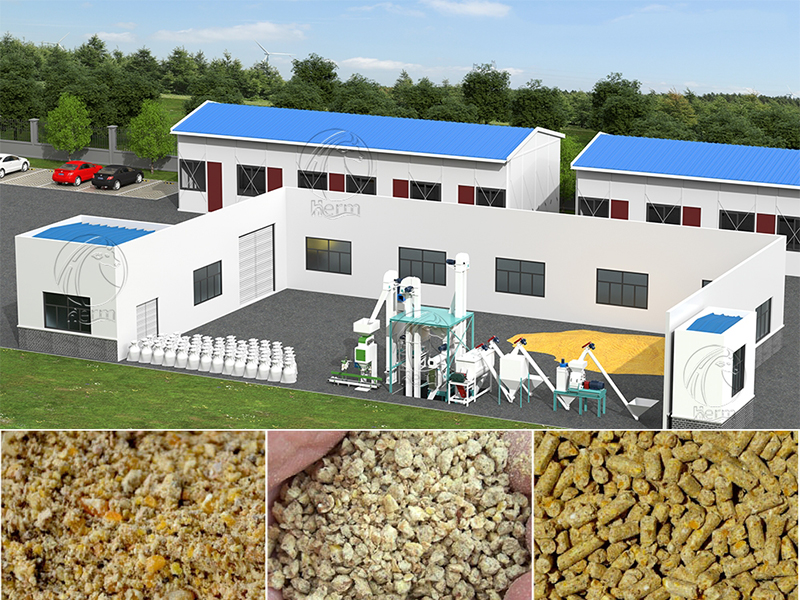
Decide whether the plant will produce mash, pellets or crumbles. A mash line focuses on ingredient preparation and mixing; a pellet line adds forming, cooling and appropriate finishing equipment.
Develop the feed formula for the intended birds and feeding stage. Equipment selection should then reflect the ingredients, particle-size requirements and finished-feed specification.
- Target hourly and daily output
- Available ingredients and supply arrangements
- Feed form, bag sizes and dispatch method
- Building dimensions and utilities

Match the Pellet Mill to the Required Output
Flat-die and ring-die pellet mills serve different production requirements. Compare the complete configuration, including conditioning, motor power, die selection and expected throughput with your proposed formula.
A nominal capacity alone is not enough to select a machine. Ask how ingredient properties and pellet diameter affect output, and clarify wear-part replacement and maintenance access.
For smaller feed particles, discuss whether a crumbler and grading stage are needed after cooling.

Build Consistency into Every Batch
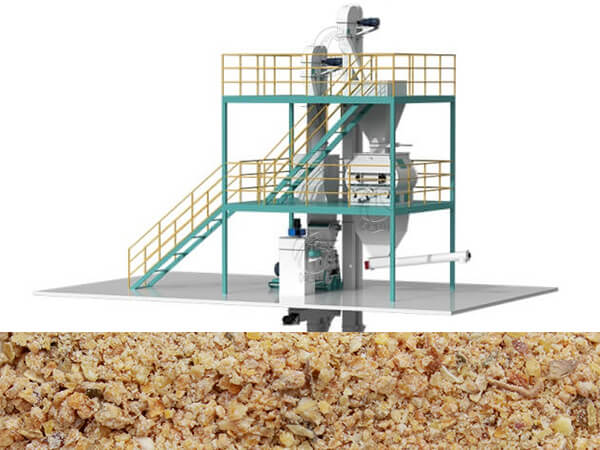
Feed mixers combine weighed ingredients before the next processing stage. Vertical and horizontal arrangements should be evaluated against batch size, ingredient properties and the required production cycle.
Include small-dose ingredients and liquids in the design discussion. Loading sequence, mixing time, discharge performance and cleaning access all affect practical operation.
Coordinate batching and mixing
Confirm how ingredients will be weighed and transferred so the mixer can supply the downstream process without unnecessary waiting.

Prepare Ingredients for the Process
A hammer mill reduces grains and other suitable raw materials to the required particle size. Choose screens and feeding arrangements around the actual ingredients rather than machine capacity alone.
The grinding section also needs practical dust collection, foreign-material control and access for screen and hammer inspection.
Coordinate grinding capacity with batching, mixing and pelleting to keep material moving steadily through the line.

Cool, Check and Pack the Finished Feed
Freshly formed pellets require cooling before storage or packing. Feed coolers remove heat and help manage moisture after pelleting; any additional drying requirement should be assessed for the specific process.
Screening separates fines or off-size material, while weighing and packing equipment prepares feed for dispatch. Specify bag weights, packaging materials and the expected handling rate.
Plan finished-feed storage and loading access alongside the production equipment.

Review the Layout Before Construction
HERM provides factory layout and 3D design services to coordinate equipment positions, storage areas and material flow. Share site drawings, available height, utilities and expansion plans before finalizing the configuration.
Building works and steel silo systems should be reviewed as part of the overall project scope. Confirm responsibility for foundations, structures, power connections and local construction work.
Leave sufficient access for inspection, cleaning and equipment maintenance. The final layout should be checked against local requirements and the selected machinery.

Prepare for Commissioning and Daily Operation
Define installation, commissioning and training responsibilities before equipment delivery. Agree the checks needed to confirm that machinery, controls and conveying systems operate together.
Training should cover operating sequences, routine inspection, cleaning and basic troubleshooting. Confirm spare-parts availability and the arrangements for ongoing technical support.
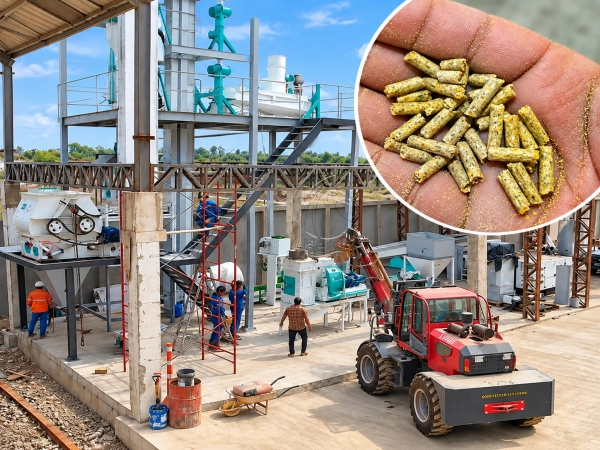
For a relevant reference, explore HERM’s 8–12 T/H feed mill installation in Ethiopia. Use project references to discuss a configuration suited to your own site and production needs.

Discuss Your Poultry Feed Project
Send your target output, feed types, ingredient list and building dimensions to discuss equipment selection and plant layout.
Founded in 2010, Henan HERM Machinery develops feed mill machinery and supplies animal feed machines and cattle feed plants.